



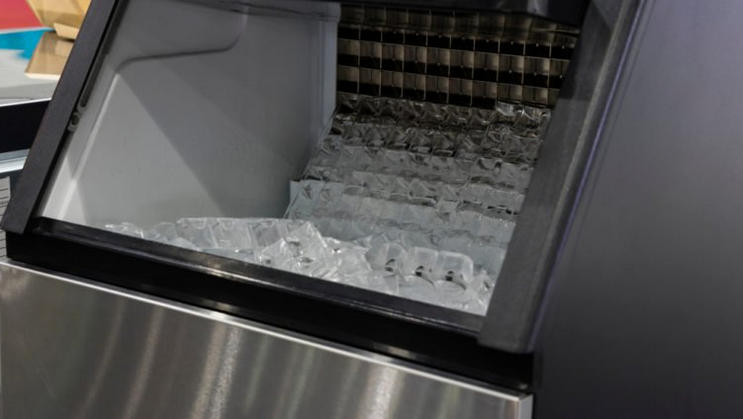
 An ice machine seems pretty simplistic. It takes water and then cools it to turn it into ice. But how does the ice machine “know” how full it is? And how does that impact the size of your ice cubes? We’ve taken a closer look at exactly how an ice machine works.
How Ice Machines Work
Ice makers all work in the same basic way. It relies on a process of continuous heating and cool, condensation and evaporation in order to create ice. First, a refrigerant is forced through a series of small coils, which pressurizes the gas inside the coils, heating it. Then, when the gas reaches the needed temperature, the refrigerant is released into larger tubes that cool the gas. This creates condensation, and the gas within the coils becomes a liquid.
After this process occurs, the condensation is then taken to a stainless steel evaporator. A reservoir in the ice maker then ensures that the water runs over the surface of the evaporator. Once the water level reaches a certain point, the water is cooled to freezing, and then the harvesting cycle begins. The refrigerant is routed to the evaporator to loosen the newly formed ice cubes, which are then transferred to a bin or dispenser.
Float Switches in Ice Machines
Float switches play a huge role in an ice machine. It tells the machine when to stop freezing the water since it communicates the water level. If the float switch is working improperly, then water levels could overflow or could not fill enough. This could make much smaller ice cubes for the harvest stage.