




 In extreme temperature environments, how does a tank or similar container know when a liquid inside has gotten too hot? A fluid switch is there to send a signal.
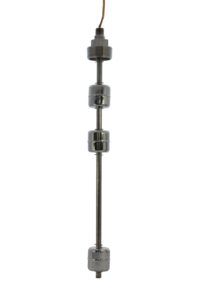
Ideal for laboratory environments and food equipment applications involving ambient and pressurized fryers, steam tables, industrial settings, heating elements, oil levels, and high/low switches, a multi-level sensor is essentially attuned to the demands of more sophisticated processing systems, more precise controls, and strict regulatory environments. In operation, it’s able to monitor multiple liquid level points in a single tank, all while requiring a single entry point and wiring source.
How It Works
A typical multi-level sensor has four positions, three designed to monitor hot fluid levels and one to determine if the liquids have gotten unsafely low. On a general level, this plastic or metal sensor has a floating component, which is attached by a stainless steel rod. These two parts are then encased in a plastic sleeve, and the outside then senses the float’s and magnet’s movement. Ultimately, the sensor makes sure the tank’s coils are never exposed above the fluid level, which could become dangerous if unchecked.
 Benefits

What does this type of sensor do or offer?
- These multi-level sensors are capable of normally operating in extremely high temperatures – up to 400 degrees Fahrenheit in some cases.
- They meet strict standards for laboratory and food environments, including EU WEEE directive 2002/96/EC and RoHS directive 2002/95/EC.
- They’re capable of operating in both hot and cold environments.
- It has a hermetically sealed construction and uses dynamically tested contacts.
As multi-level liquid sensors often require a custom solution, SMD Fluid Controls is there to assist you with a range of full-size and miniature models made out of steel or plastic. These can monitor up to six fluid levels and can be designed for a range of applications.
To get one suited to your needs, use our interactive configuration tool if you already have the switch’s technical specifications. Or, if your project is still being drawn up, work with our engineers to create a custom design specifically for your application.