



 Sometimes it seems like modern cars have more in common with a computer than the vehicles our grandparents drove. Each and every new car that takes to the roads is packed with computer chips, sophisticated sensors, and other diagnostic tools that gauge everything from tire pressure to fuel efficiency and give you their levels right on your dashboard.
The major exception? Most drivers still rely on good old-fashioned dipsticks to get their oil level. Why is that?
The Importance of the Oil Level in Your Car
First, let’s establish why oil levels are so important in the first place.
First and foremost, motor oil is used to lubricate the moving parts of your automobile’s engine. Car engines run at thousands of RPM by exploding highly combustible gasoline fumes to drive pistons; which is to say, they have a tendency to get quite hot. Without proper lubrication your car’s engine can get too hot, causing catastrophic damage. Low oil levels due to routine wear or one or more oil leaks can result in improper lubrication and significant engine damage down the road (no pun intended). It’s recommended by most manufacturers that you check your oil every time you get gas in order to ensure that your levels aren’t too low. But if it’s really that important, why leave measurement up to something as primitive as a dipstick (stick goes in oil, oil sticks to stick), to say nothing of the expectation that most people will take the time to open their hoods and check once or twice a week? There are a few reasons.
Why Most Cars Still Rely on Dipsticks Instead of Sensors
Oil Level Sensors Would be Redundant
Most cars already have an oil pressure gauge built-in to the onboard diagnostic system. If oil levels drop to the point where there’s a serious problem, pressure will drop in kind and a telltale light will alert the driver. Conversely, if oil levels are too high pressure will rise and put strain on rings and gaskets, in addition to posing a fire hazard. Because oil level is most important in terms of too much/not enough, the pressure sensors most drivers are already familiar with make more sense than a more precise level sensor.
 It Would be Really Hard to Get a Reading
Engine oil is constantly moving when the car is on, making it extremely difficult to get an accurate reading using something like a float switch. Dipsticks work because they’re used when the car is off, and enough time has passed to allow the oil to collect itself via gravity in the oil pan. If a high-tech oil level sensor would only work when the car is off anyway, why bother rigging it up to the onboard diagnostics?
Actually, Some Cars Do Have Oil Level Sensors
As a point of fact, many luxury car manufacturers have been using electronic oil level gauges and sensors for years. Porsches and Audis, for example.
As newer cars move toward a more computerized system overall (so much so that top brands are starting to think at-home repairs could violate their software copyrights), many are beginning to forego dipsticks in favor of computer diagnostics. It’s still not the norm for most people on the road in America, but it could be in the not-too-distant future. For those of us who still use the old ways, keep reading to get a primer on checking your oil with a classic dipstick.
How to Check Your Engine Oil Levels with a Dipstick
- If you don’t have a luxury car and need to make do with a dipstick, here’s how you do it:
- If your engine is warm, make sure it has been turned off for at least five or ten minutes so that the oil can gather in the pan.
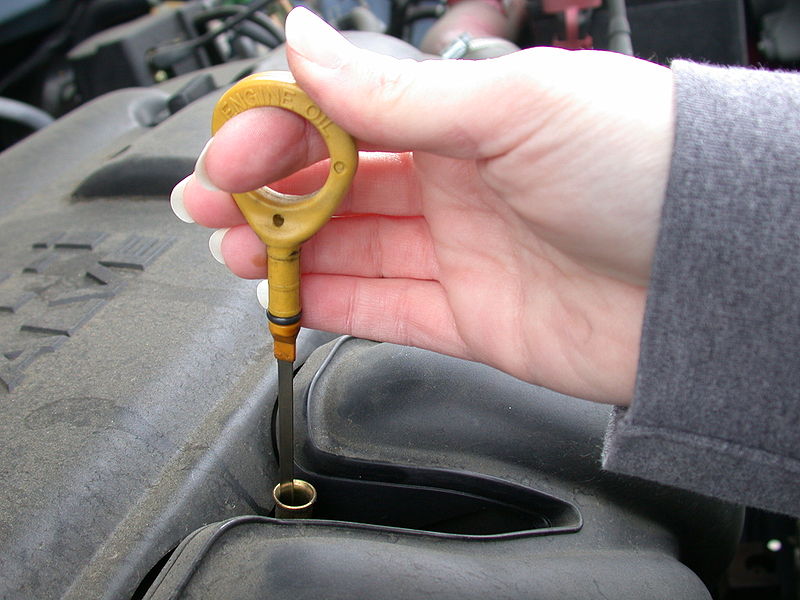
- Pull the dipstick out carefully (if you don’t recognize it, check your car’s owner manual), and wipe the whole thing off with a clean, lint-free rag or paper towel.
- Insert the stick back into the pipe from which you pulled it. Make sure it goes all the way down.
- Pull the dipstick out again, and carefully look at the residue left at the end of the stick. How far up the length of the stick determines the oil level in the engine. The manufacturer usually includes low-level and high-level markers for your reference. Check your manual for more info.