



 Aquaponics is a system of farming where plants and fish are raised together in a self-contained, symbiotic ecosystem. In a nutshell, fish are kept in aquaculture tanks and their waste converted into nitrates with special bacteria cultures. The nitrates are then used as fertilizer for an attached hydroponic crop system by cycling the water. Plants filter the water, which is then returned clean to the fish tank to repeat the cycle.
Aquaponics has gained a great many proponents in recent years for its organic process, its lack of waste, and its overall environmental friendliness. But it’s also been picking up steam as a community project for school children and similar groups to teach science, gardening, healthy eating, and more. Let’s look at a few examples of successful school aquaponics programs from across the country.
Hannahville, Michigan
Instituted last fall by the Hannahville’s Youth Services Department, Hannahville’s aquaponics program was set up to provide opportunities to students. Local students work, and in some cases are employed, at the greenhouse, and crops are sold to raise funds for the Youth Services Department.
“One of the underlying objectives is to have a funding resource for our Youth Employment Program,” said Director of Youth Services Rod Lovell of the project. “It’s a cultural thing, too – bringing farming back and getting in touch with the land.”
Crops grown in Hannahville’s aquaponics program include lettuce, chard, and a variety of herbs. Over 600 heads of lettuce are already produced per week, and there are plans to expand the program and system this summer.
Georgetown, Delaware
Students at Delmarva Christian High School have built an aquaponics system as a part of their Science Beyond the Classroom course. “I didn’t know what to expect at first,” said Jorja Eppehimer, a student at the school. “But I was surprised at how fun the class was!” Students based their system based on one they saw while touring Delaware State University, using goldfish and crawfish as their fish because of their low cost, adaptability, and high levels of waste production. The class also included projects and field trips based around geology, natural history, and wildlife sciences. “All of the students really got into it,” said teacher Paul Phalen
 Heflin, Alabama
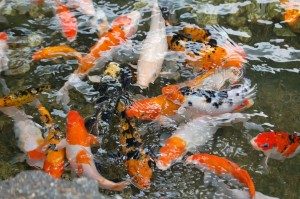
Seventh-grade life science students at Cleburne County Middle School in Heflin, Alabama are growing crops like cucumbers are strawberries and raising koi and tilapia as part of an aquaponics project spearheaded by teacher Clint Payne.
A former gardener and catfish farmer, Payne created the program with the intention of teaching kids about gardening and creative problem solving. And it appears to be going swimmingly: one student created a mechanical system for feeding the fish overnight. Another student, Addie Ward, said she’s planning on starting a garden at home with her mom thanks to what she’s learned.
Windsor, Connecticut
Windsor’s John F. Kennedy Elementary School and FRESH Farm Aquaponics in Glastonbury have teamed up to help kids grow crops right in their classroom with the help of a custom aquaponics system. Koi fish and lettuce are the two main components of the system, which is part of a broader project called, “Mission to Mars.” The aquaponics system is meant to illustrate how agriculture might look when humans create permanent settlements on the Red Planet. “We are training kids for jobs of the future,” teacher Oletha Walker said. “With this, you can farm fresh foods wherever you are.”