



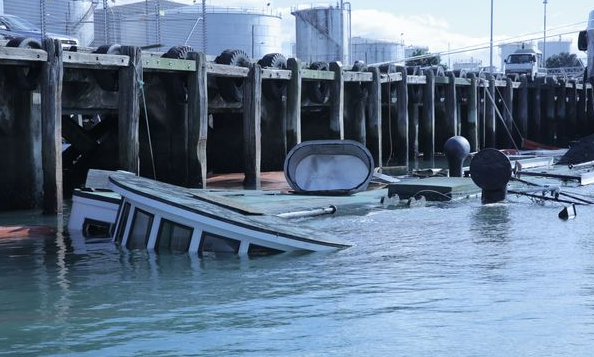
 Lovers of New Zealand’s rich maritime history suffered what may prove to be a devastating loss last week, when Auckland’s beloved icon, the Waitemata Harbour’s Kestrel Ferry sank in the early morning hours of March 8.
Described by the Kestrel Preservation Society as, “Auckland’s most significant maritime icon with rich cultural and historical value,” the Kestrel was launched in 1905 and in its heyday carried as many as 20,000 passengers a day as a passenger ferry and excursion vessel. It was the last seaworthy vessel of the Waitemata Harbour double-ended steam ferries that used to run between Auckland and the harbor’s North Shore.
“It’s a great pity for a vessel like this to sink so unexpectedly,” said Luke Henshall, a spokesman for the Auckland Council’s Panuku Development Auckland.
What Went Wrong?
It’s thought that a catastrophic hull failure was the cause of the sinking. The ferry’s hull was known to have minor leaks typical in vessels of the Kestrel’s age, in addition to a woodworm infestation diagnosed in 2011. Although Preservation Society chairman Mike Alston noted that the vessel was “generally sound for its age.”
The Kestrel’s bilges had been pumped every two weeks, and a float switch alarm was set up in order to alert workers via text if the boat was taking on too much water.
“The strange thing from our point of view is that the alarm never sounded,” said Alston, adding, “The alarm worked reasonably well when we didn’t need it, then when we did need it, it didn’t work.”
Had the float switch alarm been working properly, authorities might have been alerted in time to bail out or otherwise prevent the ship from fully sinking. As it stands, the ferry’s upper structure is being considered a “total loss,” with flotsam and debris bobbing even a week later at its former berth.
While some have speculated foul play may have been responsible for the ferry’s sinking (Auckland council members and other commercial organizations had reportedly wante d the historic ferry moved from its prime plot of dockside real estate), “natural causes” are currently being considered the most likely cause of the hull breach.
The Importance of Maritime Float Switches
Ships of any age are always susceptible to leaks and other hull breaches, due to regular wear or acute impacts. While older ships like the Kestrel are obviously more vulnerable to the former, even the Titanic sank after the latter. That’s why it’s important to have a float switch alarm for your maritime vessel to alert you as to leaks or other emergencies.